Of course. Designing a drone is a fascinating multidisciplinary process that blends aerodynamics, electronics, software, and materials science. The design process can be broken down into several key phases, from initial concept to final production.
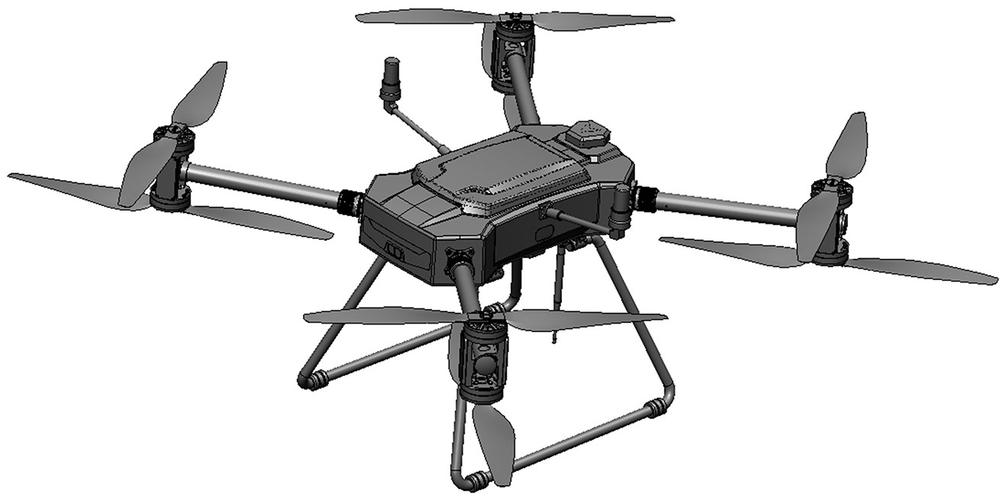
Here is a comprehensive design guide for a drone, structured for clarity and practicality.
Phase 1: Conceptualization & Requirements Definition
This is the most critical phase. You must define what the drone needs to do before you can design how it will do it.
1. Define the Mission Profile (The "Why")
What is the primary purpose of the drone? This single question dictates every subsequent design choice.
- Aerial Photography/Videography (Cinematic):
- Requirements: Smooth, stable flight, high-quality gimbal (3-axis), long flight time, quiet operation.
- Design Focus: Aerodynamics, vibration dampening, camera compatibility.
- FPV (First-Person View) Racing:
- Requirements: Extreme agility, high speed, durable frame, low latency video transmission.
- Design Focus: Lightweight, high-power-to-weight ratio, robustness.
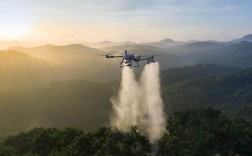
- Mapping/Surveying (GIS):
- Requirements: High positional accuracy (RTK GPS), long flight time, ability to fly precise survey patterns, high-resolution camera.
- Design Focus: Aerodynamic efficiency, reliable GPS, payload capacity, flight controller software.
- Industrial Inspection (Power Lines, Wind Turbines):
- Requirements: Obstacle avoidance, long flight time, high-quality zoom camera, possibly thermal/NDVI sensors, data security.
- Design Focus: Redundancy, reliability, sensor integration, robust communication.
- Delivery:
- Requirements: High payload capacity, long range, reliable navigation in semi-urban areas, weather resistance.
- Design Focus: Aerodynamics for efficiency, powerful motors, fail-safe systems.
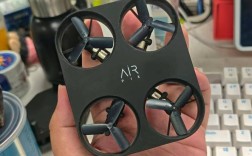
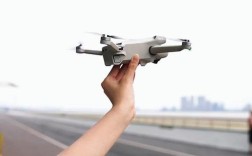
- Hobby/Beginner:
- Requirements: Easy to fly, durable, low cost, simple to repair.
- Design Focus: Simple frame, protective propeller guards, accessible electronics.
2. Establish Key Performance Indicators (KPIs)
Based on the mission, set measurable goals.
- Flight Time: 25 minutes? 40 minutes? 60+ minutes?
- Payload Weight: 500g camera? 2kg survey sensor? 5kg delivery package?
- Max Speed: 50 km/h for mapping? 120 km/h for racing?
- Range: 5 km (line-of-sight)? 20 km (beyond visual line of sight - BVLOS)?
- Max Wind Resistance: Can it handle a 15 km/h headwind?
- Endurance: How many flight cycles can the battery handle?
Phase 2: Airframe & Aerodynamics Design
The airframe is the drone's skeleton. Its design is a trade-off between weight, strength, aerodynamics, and accessibility.
1. Frame Type Selection
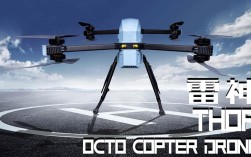
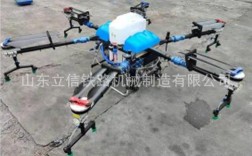
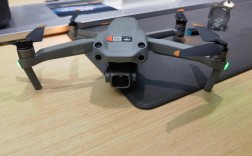
- Multirotor (Quadcopter, Hexacopter, Octocopter):
- Pros: Simple mechanics, VTOL (Vertical Take-Off and Landing), stable hovering.
- Cons: Inefficient for forward flight, high power consumption.
- Best for: Cinematic, FPV, inspection, mapping, beginners.
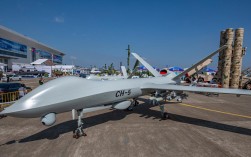
- Fixed-Wing (Airplane):
- Pros: Highly efficient for long-range and long-endurance flights. Can glide.
- Cons: Needs a runway or catapult for launch, cannot hover.
- Best for: Large-area mapping, long-range surveillance.
- VTOL (Tiltrotor, Tiltwing, Hybrid):
- Pros: Combines the best of both worlds: vertical takeoff/hovering and efficient forward flight.
- Cons: Mechanically complex, heavier, more expensive.
- Best for: Delivery, long-range surveillance where hovering is required.
2. Material Selection
- Carbon Fiber: Stiff, strong, and very light. The premium choice for performance drones. Can be brittle.
- Glass Fiber (Fiberglass): Good strength-to-weight ratio, more flexible and less expensive than carbon fiber. A great all-rounder.
- Aluminum: Strong, durable, and can be machined precisely. Heavier than composites. Good for heavy-lift frames and camera gimbals.
- Plastic (ABS, Nylon): Very cheap and durable. Good for beginner and toy drones. Prone to flexing under load.
3. Aerodynamics (For Multirotors)
While multirotors aren't aerodynamic marvels, you can optimize them:
- Arm Design: Streamlined arms reduce drag during forward flight.
- Motor Placement: Inward or outward-facing motors can affect stability and efficiency.
- Overall Shape: A compact design is generally more aerodynamic than a wide, sprawling one.
Phase 3: Power System Design
The power system is the heart of the drone. Its performance directly dictates flight time and payload capacity.
1. Battery Chemistry
- Lithium-Polymer (LiPo): The industry standard for drones. High energy density, high discharge rates.
- Specs: Voltage (S-cells, e.g., 6S = 6 cells in series), Capacity (mAh), Discharge Rate (C-rating, e.g., 45C).
- Lithium-Ion (Li-Ion): Safer than LiPo, more energy-dense per gram, but heavier per volume. Common in commercial and industrial drones.
- Solid-State (Future): Promises even higher energy density and safety, but not yet mainstream.
2. Motor Selection
- KV Rating: RPM per volt. A low-KV motor is for high-torque (efficiency, heavy lift). A high-KV motor is for high-RPM (speed, acrobatics).
- Size: Motor size (e.g., 2207, 2812) generally correlates with power and torque.
- Type: Brushless motors are the only viable option for modern drones due to their efficiency and longevity.
3. Electronic Speed Controller (ESC)
- Function: Acts as a middleman, taking commands from the flight controller and delivering the precise amount of power to the motor.
- Specs: Amperage rating (must exceed the motor's max draw), voltage compatibility (e.g., 2-6S), firmware (BLHeli_32 is popular).
4. Power Distribution
- Power Distribution Board (PDB): A simple board to neatly distribute power from the battery to the ESCs and other components like the flight controller and VTX.
- Battery Eliminator Circuit (BEC): A circuit that steps down the main battery voltage (e.g., 22.2V) to a lower voltage (e.g., 5V or 12V) to power the flight controller and receiver.
Phase 4: Avionics & Control System
This is the drone's brain and nervous system.
1. Flight Controller (FC)
- Function: The central computer that processes sensor data and executes flight control algorithms (stabilization, navigation).
- Key Features:
- Sensor Suite: IMU (Inertial Measurement Unit - gyro, accelerometer, magnetometer).
- Connectivity: USB for configuration, UARTs for connecting peripherals (GPS, telemetry, radio receiver).
- Software: Runs firmware like ArduPilot (open-source, very powerful) or Betaflight (open-source, popular for FPV/racing). DJI also offers excellent proprietary flight controllers.
2. GPS/GNSS Module
- Function: Provides position, altitude, and velocity data. Essential for holding position, return-to-home (RTH), and autonomous flight.
- Types: Standard GPS vs. RTK GPS (centimeter-level accuracy for surveying).
3. Radio & Telemetry
- Radio Transmitter/Receiver (TX/RX): The link between the pilot and the drone. Modern systems like ExpressLRS and TBS Crossfire offer long range and low latency.
- Telemetry Radio: A separate, lower-power radio (e.g., SiK Radio) that sends flight data (battery voltage, GPS coordinates, altitude) from the drone to a ground station and can receive commands.
4. Sensors (Optional but common)
- Visual Odometry (VO): Uses a downward-facing camera to estimate position, useful for GPS-denied environments (indoor, under bridges).
- LiDAR: Uses lasers to create 3D maps of the environment, excellent for precision landing and obstacle avoidance.
- Ultrasonic Sensors: Cheap sensors for very low-altitude obstacle detection and landing.
- Barometer: Measures atmospheric pressure to estimate altitude. Can be "fooled" by rapid weather changes.
Phase 5: Payload & Integration
The payload is the reason the drone is flying.
1. Camera & Gimbal (for Photogrammetry)
- Camera: A high-quality, global-shutter camera is essential for mapping to avoid distortion. Sony cameras are a popular choice.
- Gimbal: A 3-axis motorized mount that isolates the camera from the drone's movements. It must be precisely balanced and tuned with the flight controller for smooth footage.
2. Specialized Sensors
- Thermal Camera: For search and rescue, firefighting, and electrical inspections.
- LiDAR Scanner: For creating high-precision 3D models of terrain and structures.
- Multispectral/Hyperspectral Camera: For agriculture (NDVI analysis) to assess crop health.
3. Integration Considerations
- Weight & Balance: The center of gravity (CG) of the entire aircraft (including payload) must be carefully managed. An off-center CG will make the drone difficult or impossible to control.
- Vibration: Motors and propellers create vibrations that can blur camera images and interfere with sensors. Use gimbals, vibration-dampening balls, and soft mounts to isolate sensitive components.
- Power: Ensure the power system can handle the additional draw from the payload.
Phase 6: Manufacturing & Prototyping
- 3D Printing: Excellent for rapid prototyping of custom parts, especially for complex or lightweight designs.
- CNC Machining: The standard for high-quality, precision-cut parts from carbon fiber, aluminum, or G10 fiberglass.
- Hand-Lamination: The process of manually laying up layers of carbon fiber and resin to create custom parts.
Iterate, Test, Repeat: Build a prototype, test it rigorously, identify weaknesses, and refine the design. This cycle is key to a successful product.
Phase 7: Software & Ground Control
1. Flight Planning Software
- Mission Planner (for ArduPilot): A powerful desktop and mobile application for planning autonomous missions, configuring the drone, and analyzing data.
- DJI GS Pro: A professional app for planning complex flights for DJI drones.
2. Ground Station
- Can be a laptop, tablet, or even a dedicated controller running software to display live telemetry, maps, and video.
Phase 8: Safety, Legal & Compliance
This is non-negotiable, especially for commercial operations.
- FAA Part 107 (USA) / Equivalent Regulations: Know the rules for licensing, operations, line-of-sight requirements, and no-fly zones.
- Geofencing: Respect software-enforced no-fly zones around airports and sensitive areas.
- Redundancy: For critical operations, consider redundant components like a second battery or a dual GPS system.
- Fail-Safe Programming: Configure the drone to execute a safe action (e.g., RTH, land) if signal is lost or battery is critically low.